French election: first-round outcome

There were no major surprises in the first round of France’s snap parliamentary elections, despite the highest voter turnout in several decades.
Just as the polls were suggesting, Marine Le Pen’s Rassemblement National (RN) received a third of the votes, followed by the left Nouveau Front Populaire (NFP) bloc with almost 30% of the vote, and only then Macron’s Ensemble alliance with just over 20%. That means this Sunday’s second-round vote will be a three-way contest.
While Le Pen, Bardella et al were all smiles in the aftermath of the result, a majority is far from guaranteed this weekend. Both the left and centrists have signalled that they will prioritise preventing the far-right from making further gains, and so are likely to adjust their final candidate lists (due late Tuesday). For example, the left-wing parties – ranging from the far-left to more moderate Socialists – have stated they will remove any candidates that finished in third place, in turn boosting Macron’s party odds (three people qualified in more than half of France’s 577 constituencies).
The bottom line is that the ‘co-habitation’ scenario – in which France is governed by Macron and a (28-year old) RN Prime Minister – may not be on the cards. Instead, we could see a hung parliament, which would block any extreme policies from the RN.
Even if the latter were to win a majority, the impact on local markets would not necessarily be dramatic. Volatility may surge in the near term and French government spreads could remain elevated due to heightened fiscal concerns. Yet, France leaving the euro – the bigger risk which would impact global stock markets – is not on the table. Marine Le Pen has moderated her party’s stance over the past decade (it remains on the extreme end of the political spectrum, nonetheless).
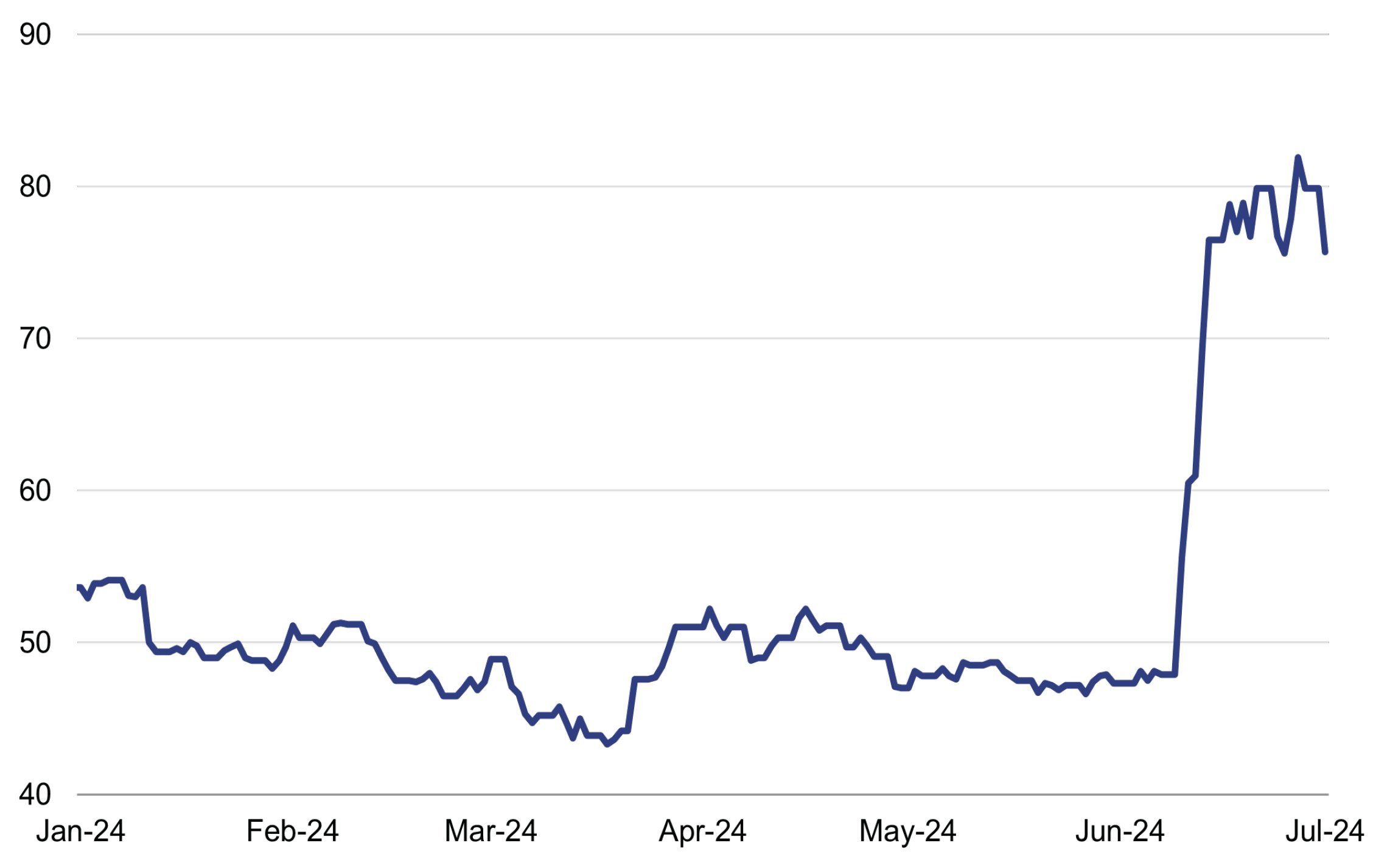
This morning’s market reaction reflects our thoughts. French stocks have initially woken up to a 2% gain, the 10-year OAT spread with German government bonds – a measure of wider euro area risk – has narrowed slightly (Figure 1), and the euro has moved modestly higher against the dollar. A return to pre-election levels across these asset classes is unlikely until we know Sunday’s second round outcome. But it is unlikely to affect the things that matter more to stocks – the outlook of earnings and interest rates – and Europe’s growth backdrop remains constructive, with GDP turning a corner and real wages growing again.
Figure 1: 10-year France (OAT) - Germany (bund) government bond spread
Basis points
Ready to begin your journey with us?
Speak to a Client Adviser in the UK or Switzerland
Past performance is not a guide to future performance and nothing in this article constitutes advice. Although the information and data herein are obtained from sources believed to be reliable, no representation or warranty, expressed or implied, is or will be made and, save in the case of fraud, no responsibility or liability is or will be accepted by Rothschild & Co Wealth Management UK Limited as to or in relation to the fairness, accuracy or completeness of this document or the information forming the basis of this document or for any reliance placed on this document by any person whatsoever. In particular, no representation or warranty is given as to the achievement or reasonableness of any future projections, targets, estimates or forecasts contained in this document. Furthermore, all opinions and data used in this document are subject to change without prior notice.
Read more articles
-
Growth Equity Update
Insights
The 52nd Growth Equity Update from Patrick Wellington, Vice-Chairman of Equity Advisory.
-

Monetary policy - behind the curtain
Strategy Blog
Interest rate expectations have shifted markedly in 2026, with markets now anticipating higher rates amid persistent inflation, economic resilience and more hawkish central banks. Despite this, strong AI-driven earnings have supported equities.
-

Stories from the road
Quarterly Letter
Through deep research and direct engagement with businesses, we seek high-quality companies with strong competitive advantages, disciplined capital allocation and the ability to compound wealth over time.
-

Bringing the right advisers together
Insights
Significant wealth brings complex financial and personal decisions. Rothschild & Co helps coordinate trusted advisers, ensuring aligned, objective guidance, long-term planning and access to specialist expertise through a personalised advisory board.
-

Five stock market talking points in 2026
Strategy Blog
Global equities rose despite geopolitical tensions, as markets looked through near-term risks. AI infrastructure spending drove returns and earnings growth, valuations sent mixed signals, and corporate activity remained subdued but showed signs of recovery.