Creating a multigenerational plan
Whether you're a first generation entrepreneur, or a family working hard to preserve your generational wealth, understanding your goals and having an effective financial plan in place is vital.
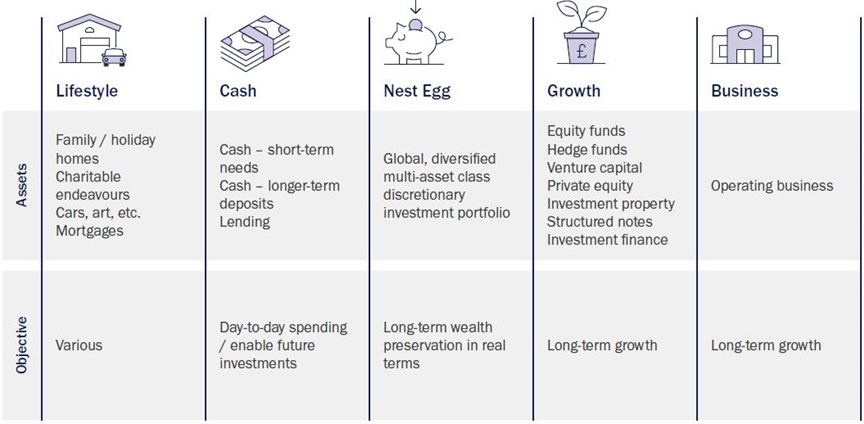
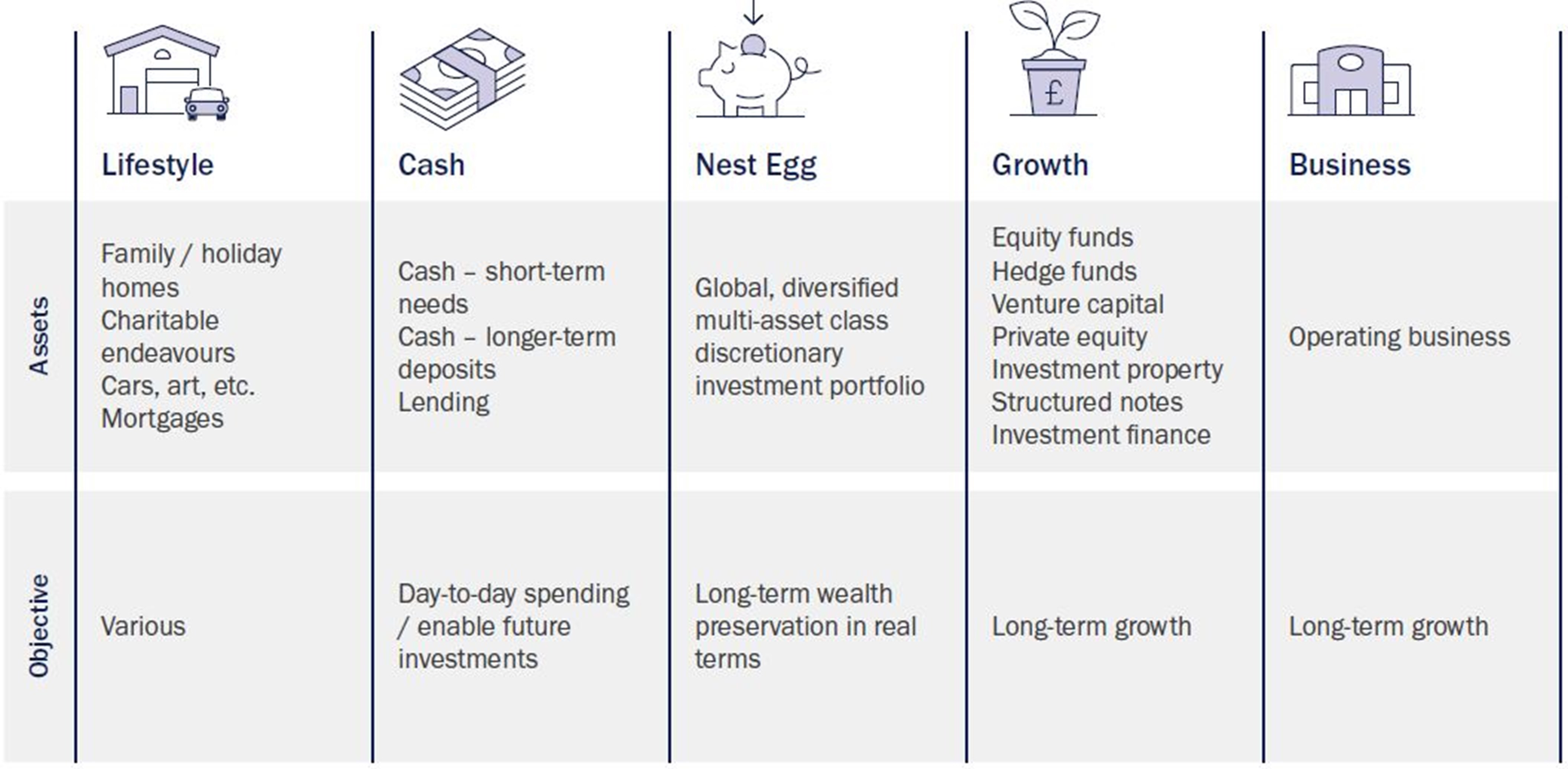
Many of our clients find it helpful to use our wealth framework to begin considering their financial needs. Our framework allows you to segregate your wealth into different 'pots', each with a range of objectives driven by the accessibility, target returns and risk tolerance you need to plan ahead and preserve and grow your wealth for the future.
However, we understand that no two clients are the same. Our clients' needs are often complex and unique. We're here to keep you wealthy, and our extensive network of world-leading lawyers and accountants means we can pair you with the best experts to meet all your individual needs.
Wealth framework
Understanding your long-term goals
It's vital to think about your future – both your short-term spending requirements and your long-term aspirations and legacy.
It's important to take the time to consider how you wish to enjoy your wealth and what is important to you, by asking the right questions:
- How much do you need to spend each year?
- Are you looking to buy a holiday home or a piece of art?
- Do you want to pay for the education of your grandchildren?
- Are there any philanthropic causes you are passionate about?
- Do you want to invest in a new business venture of your own, or deploy some capital as an angel investor?
- What do you wish to leave behind for future generations?
Prioritising wealth preservation
Our first priority is always to protect your wealth, not make you a second fortune. For anyone interested in long-term security, establishing a ‘nest egg’ is one of the most effective ways to preserve and grow wealth. Experience has shown us that looking years and decades ahead is the most effective way to help you stay wealthy.
Our network
Our clients often have complex needs, and while we can't solve all of them directly, we act as a sounding board across our clients' financial affairs. At Rothschild & Co, our clients benefit from our experience of complex problem solving and our extensive network of experts and contacts.
We also work closely with our colleagues in our Global Advisory and Arrowpoint Advisory teams to provide advisory and execution services to businesses, private equity, families and entrepreneurs.