Longevity and health span: a new frontier for ESG investing

When Netflix released Live to 100: Secrets of the Blue Zones, millions of viewers were captivated by the lives of people in Okinawa, Sardinia and Costa Rica’s Nicoya Peninsula, communities where reaching 100 is not an exception but the norm. These centenarians tend their gardens, walk to see friends and share daily meals rich in vegetables and laughter. Their secret is not a miracle pill but a lifestyle that blends purpose, connection and moderation, a reminder that longevity is as much about quality of life as it is about quantity of years.
This fascination with living longer and better is now moving far beyond lifestyle television. It is reshaping economies, industries and investment strategies, turning longevity itself into one of the defining megatrends of our time.
Adding life to years, not just years to life
Behind this cultural shift lies a powerful demographic reality. People around the world are living longer than ever before: global average life expectancy has more than doubled since 1900, reaching around 73 years in 2023 [1]. By 2025, one in five people will be aged 60 or older [2], and population ageing is an irreversible trend. The United Nations projects that by 2050 the number of individuals over 65 will reach 1.6 billion globally, representing roughly one in six people [3]. This longevity revolution is accompanied by a health span challenge: on average, humans spend the last 10–12 years of life in poor health [4]. Societies and markets are now shifting focus from merely adding years to life to adding life to years, emphasizing healthy, active ageing.
Chart 1: Influencing active ageing
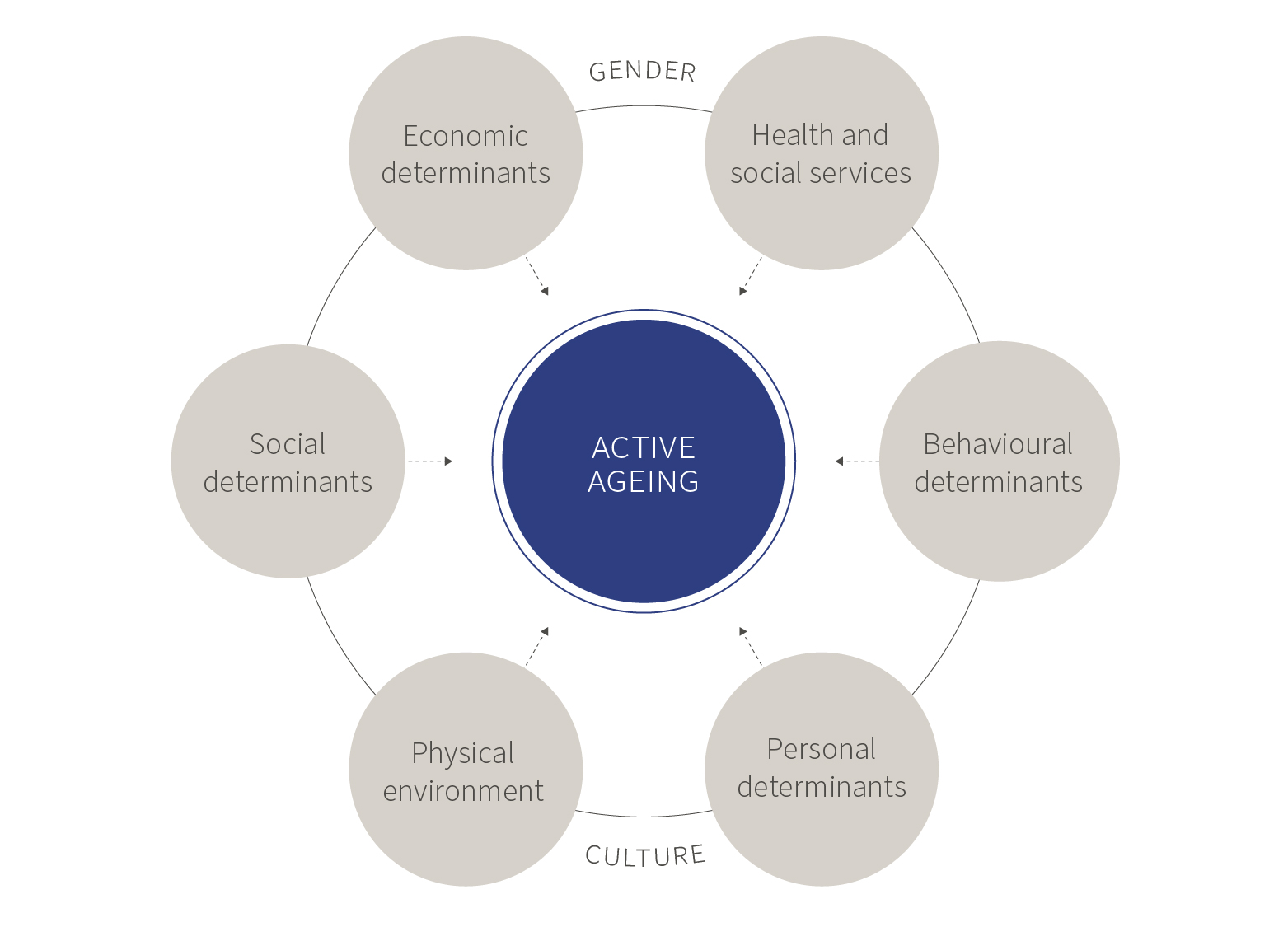
Source: Silver Economy: The age of opportunity, Rothschild & Co, December 2024 (Link).
Where age meets opportunity
These demographic shifts carry profound economic implications. Older adults, particularly the baby boomer generation, hold unprecedented wealth and spending power, making them a major economic force. In fact, baby boomers today have an average net worth on the order of USD 1–1.2 million, marking them as the wealthiest generation.
This has given rise to the “silver economy”: the market of products and services tailored to those over 50. Globally, the silver economy is already enormous (estimated around USD 15 trillion in annual spending) and set to expand further as the 60+ population doubles to over 2.1 billion by mid-century [5]. Older consumers are not only more numerous; they are also healthier, wealthier, and more educated than past generations.
Companies across sectors are beginning to innovate for this demographic, from healthcare and nutrition to travel and leisure, creating inclusive products that improve quality of life for seniors. Notably, this trend aligns with ESG priorities: businesses tapping the silver economy can generate strong profits while delivering social value by keeping ageing populations healthy and engaged.
Chart 2: Share of consumer spending, by age group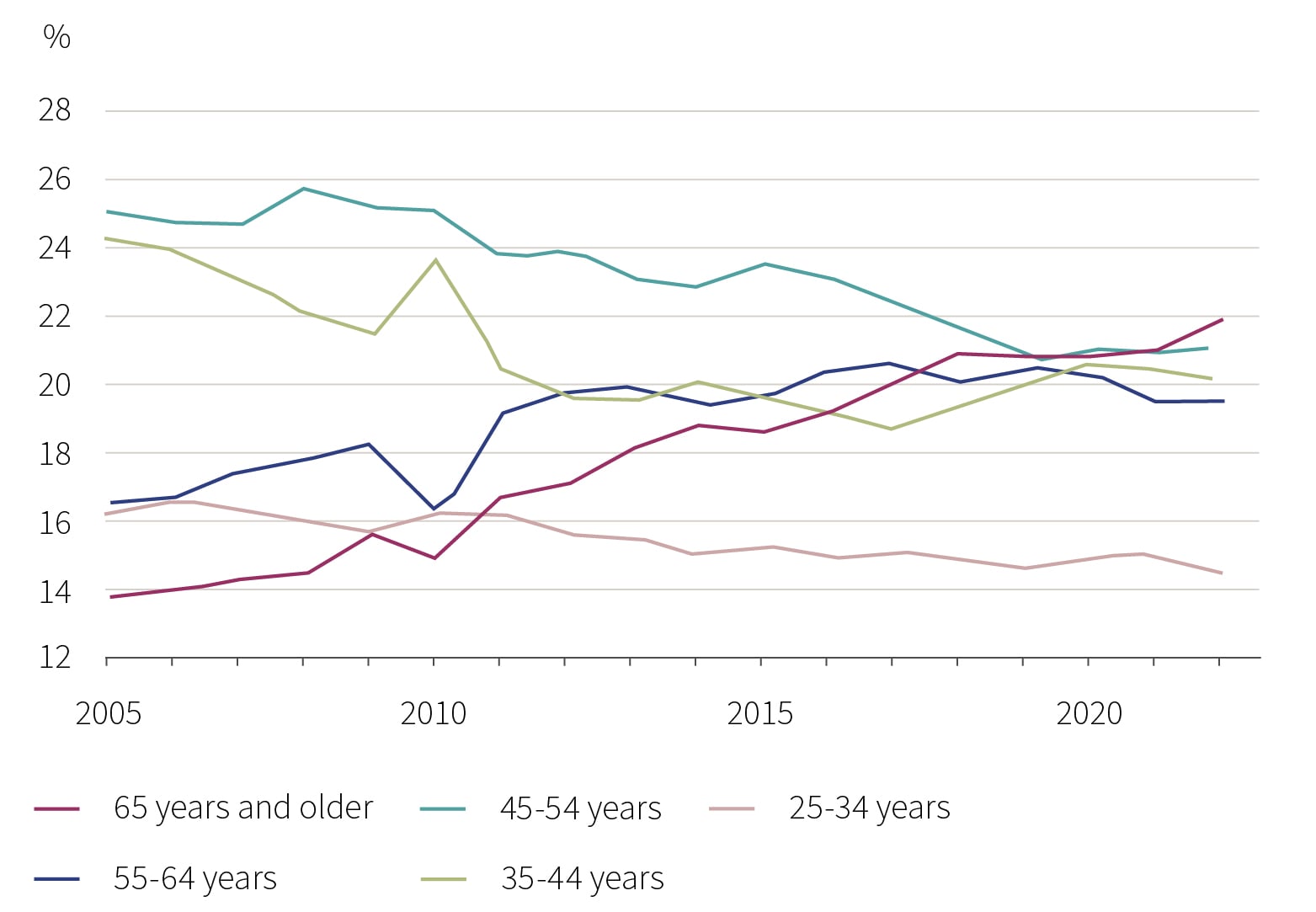 Source: The U.S. Economy’s Secret Weapon: Seniors With Money to Spend, The Wall Street Journal, October 2023.
Innovation for a longer life
The pursuit of longer and healthier lives is spurring innovation in medicine, technology, and lifestyle industries. The global anti-ageing market, spanning pharmaceuticals, wellness, skincare, and biotech, was valued around USD 85 billion in 2025 and is forecast to exceed USD 120 billion by 2030 (roughly 7% annual growth) [6].
A distinction has emerged between extending lifespan and extending health span. With rising demand to compress morbidity, researchers and companies are developing therapies to delay age-related ailments. Advances like senolytic drugs (which clear “zombie” cells), gene therapies, and AI-driven health diagnostics are moving from labs into clinical trials. For example, medications originally developed for chronic conditions have shown promise in expanding healthy years: drugs like Ozempic and Wegovy (initially for diabetes and obesity) are now being studied for their potential to reduce heart disease, cognitive decline, and other common age-related conditions, potentially extending lifespans.
Such breakthroughs could revolutionise healthcare and even reshape retirement planning and long-term care by enabling people to remain healthy and independent longer.
Rethinking risk: Insurance, pensions and property in an ageing world
The longevity revolution is reshaping industries far beyond healthcare.
- Vitality over youth: The “silver surge” in spending is already visible in sectors such as nutrition, beauty, leisure and travel as older consumers seek products that promote vitality rather than youth. Companies are responding: Nestléhas developed senior-specific nutritional supplements to support metabolic health and muscle strength, while L’Oréal is partnering with biotech firms to create “age-tech” skincare that targets skin resilience and cellular vitality. The idea is no longer to conceal age, but to live it well.
- Longevity risk and financial adaptation: At the same time, longevity brings complex financial challenges. Pension funds and insurers are confronting longevity risk - the financial pressure that arises when people live longer than expected. Even a one-year increase in life expectancy can add billions to pension liabilities or strain insurers’ reserves [7]. To adapt, the industry is revising actuarial models, turning to tools such as longevity swaps, reinsurance, and new lifetime annuity products that provide sustainable income well into a client’s 90s.
- Healthcare and retirement system reform: Health insurers are also recalibrating, as medical spending rises sharply in the final years of life [8], increasing demand for private coverage and preventive healthcare options. Governments, too, are responding by raising retirement ages and encouraging later-life employment to keep pension systems viable.
- Senior living and real estate transformation: Real estate is undergoing its own transformation. Demand for senior housing and assisted living is climbing rapidly as the 80+ population expands yet supply remains insufficient. In the United States alone, analysts project a shortfall of roughly 550,000 senior housing units by 2030 unless development accelerates [9]. This has turned healthcare and senior living real estate into one of the most promising growth segments, attracting institutional investors and giving rise to specialised healthcare REITs. Developers are also integrating “age-friendly” design - step-free layouts, smart-home health monitors, proximity to care and community - to enable ageing in place.
In short, longevity is redefining what risk means. It is not just about volatility or market cycles, but the structural challenge of outliving assumptions and the opportunity for those ready to rethink resilience across industries.
Longevity as purpose
From a wealth management perspective, the longevity boom carries a dual message: investors have opportunities to fund the solutions to population ageing, and individuals must plan for longer lifespans.
Investment opportunity
- Longevity is emerging as a full investment theme, spanning healthcare, pharmaceuticals, senior living, robotics, and AI-driven care.
- These align closely with the Social dimension of ESG, targeting financial returns and positive societal outcomes.
Wealth management implications
- Many are now planning for 30-plus-year retirements.
- Portfolios must balance long-term growth with inflation protection and sustainable income streams.
- Financial products such as lifetime annuities and long-term care insurance are gaining renewed relevance.
A new advisory role
- Wealth managers act as financial doctors, integrating investment, healthcare, and legacy planning.
- The goal is not only to accumulate wealth, but to support informed draw down decisions over longer, healther lifespans.
Looking ahead
Just as Live to 100 reminded viewers that long lives are built on purpose and connection, investors and policymakers now face a similar challenge: to create systems that make longevity sustainable. The ageing of societies is not merely a demographic shift but a structural transformation, one that will redefine healthcare, retirement, and consumption for decades to come. For investors, this is both an opportunity and a responsibility. Backing the innovations that help people live longer, healthier lives can generate attractive returns while advancing social progress. In an era of longer life expectancy, investing for longevity is not a niche theme but an essential part of building a resilient, future-ready portfolio.
[1] Our World in Data: Life expectancy, October 2025 (Link).
[2] UNFPA in China: Ensuring all older people can benefit from the development of the silver economy, February 2024 (Link).
[3] Silver Economy: The age of opportunity, Rothschild & Co, December 2024 (Link).
[4] Gabelli: The Longevity Boom: Opportunities in Anti-Aging, July 2025 (Link).
[5] DATAINTELO: Silver Economy Market Outlook, October 2025 (Link).
[6] Anti-Aging Market Report 2025: Key Data & Innovation Insights, June 2025 (Link).
[7] EFG: The longevity era: Building resilient economies and thriving societies, June 2025 (Link).
[8] EFG: The longevity era: Building resilient economies and thriving societies, June 2025 (Link).
[9] NAIOP: Winter 2024/2025 Issue: The Silver Tsunami and Investment Opportunity in Senior Housing, January 2024 (Link).
Ready to begin your journey with us?
Speak to a Client Adviser in the UK or Switzerland