Emotionally invested
Foreword
Last month marked a milestone for my family that many of our clients with children will know all too well: my youngest child’s first day at primary school.
For many parents, the weeks before a new school year can feel like a project in their own right. There are forms to complete, clubs and activities to arrange, uniforms to label and the all-important pre-term play dates to organise. Like many, I found myself trying to think several steps ahead, anticipating every possible scenario and ensuring everything was in place before the first day arrived.
Yet however carefully we prepare, there comes a point when we have to accept that not everything can be planned for or controlled.
As parents, our instinct is often to smooth the path ahead, to remove obstacles before they appear and, at times, to manage every detail on our children's behalf. Resisting that impulse can be surprisingly difficult. Part of helping children develop confidence and independence is recognising that they need room to navigate challenges, forge friendships and find their own way, even if that means tolerating a degree of uncertainty ourselves.
For many parents, the start of school is accompanied by a mixture of anticipation and trepidation. Looking back, however, the issues that seemed so significant in the moment often fade into perspective. What felt uncertain and consequential at the time becomes simply another chapter in a much longer journey.
I believe there are parallels here with wealth management and investing.
Preparing carefully for your future is important, and we spend considerable time with our clients establishing what they want their money to achieve and building portfolios designed to preserve and grow their wealth.
That said, markets have a habit of testing even the best-laid plans. There will inevitably be periods when conditions are volatile, emotions are running high and the temptation to intervene can be overwhelming.
But we believe a key part of successful investing is staying focused on the long term, even when our instincts are telling us otherwise. Much like parenting, successful investing often requires the discipline to distinguish between what we can control and what we cannot, and the confidence not to overreact when events fail to unfold exactly as expected.
In this edition of our Quarterly Letter, we explore the challenge for any investor in understanding how emotions can influence decision-making, while retaining confidence that the plans put in place leave them well prepared for what lies ahead.
As ever, thank you for reading and for your ongoing trust in us.
James Morrell
CEO, Rothschild & Co Wealth Management UK
Emotionally invested
Throughout the 1950s, American economist Harry Markowitz developed what was to become a groundbreaking contribution to the world of investing: Modern Portfolio Theory.
His work used mathematical models to identify an investor's optimal portfolio allocation based on their desired level of returns and their appetite for risk. This research would eventually earn Markowitz the Nobel Prize for Economics in 1990.
Some years later, when asked about his own portfolio allocation during his early career, Markowitz admitted he'd split his retirement contributions 50/50 between stocks and bonds. In other words, he abandoned his complex models and chose a much simpler rule-of-thumb investment approach.
"I visualised my grief if the stock market went way up, and I wasn't in it – or if it went way down and I was completely in it. My intention was to minimise my future regret," he explained.1
This was a striking admission from one of the 20th Century's foremost economists, but it illustrates a broader truth about investing. It's easy to be logical in theory; it's often harder to put that theory into practice when your own money is at risk.
In fairness, Markowitz eventually changed his investment approach later in life and diversified his assets more in line with his research.
But why do our emotions so often work against us on matters of wealth?
In this Quarterly Letter, we look at some of the answers to that question, exploring the psychological forces that can pull people away from their intended financial plans, especially during times of market upheaval.
We also explain how our investment approach is designed to provide the discipline and perspective needed to preserve and grow your wealth over the long term.
Rational versus reasonable
What drove Markowitz to ignore his own award-winning research?
You could describe his behaviour as irrational, and there are certainly many cognitive biases that can lead to poor decision-making, several of which we'll cover in this letter.
Economists have long abandoned homo economicus – the idea that humans are perfectly consistent and rational in their financial choices. "
But in many ways, Markowitz's choice was completely rational. He understood there is a strong emotional side to investing that can't be captured with formulas and equations. That's why he spoke of 'grief' and 'regret' instead of risk and returns.
Markowitz chose an investment approach that gave him the greatest peace of mind in that moment. Former Wall Street Journal columnist Morgan Housel sums up this phenomenon in his 2020 book The Psychology of Money:
"In the real world, people do not want the mathematically optimal strategy. They want the strategy that maximises for how well they sleep at night."2
Housel believes this tension is due to the inner battle between a rational decision and a reasonable one. He uses the example of fevers to explain the difference.
All the science points towards fevers helping us fight infection. They raise our core body temperature, which boosts our immune system and creates an inhospitable environment for bacteria and viruses.
So if you want to get better faster, you should let most fevers run their course. That's the rational approach. Doctors know this, and yet they routinely prescribe treatments to bring fevers under control.
Why? Because a doctor's job isn't just to cure patients, it's to make them comfortable. And when your temperature spikes, your muscles ache and you're shivering under a blanket, a rational approach starts to feel pretty uncomfortable.
Faced with this dilemma, doctors often make the reasonable choice to medicate for fevers instead. There is an obvious trade-off though — they are easing their patients' symptoms now, but potentially slowing their long-term recovery.
A similar trade-off exists in investing. Decisions that make you feel comfortable today could put your future financial health at risk.
As long-term investors, we believe time — through the power of compounding — is the best healer. While we cannot prevent markets from getting feverish, our investment approach seeks to provide genuine protection during periods of volatility.
However, we also recognise how hard it can be to resist intervention when markets are running uncomfortably hot or cold. To understand what drives the urge to act, it helps to look at the forces at work in decision-making.
Avoiding losses
There are hundreds of behavioural biases that influence the decisions we make every day. In previous Quarterly Letters, we have explored those that have the biggest impact on investment decisions, such as the endowment effect, herd mentality and the sunk cost fallacy.3
These are all distinct psychological phenomena, but they share a common thread. They reflect our deep discomfort with loss, and behavioural scientists have a name for a particularly powerful expression of this tendency: loss aversion.
While it is too simplistic to say most of our behaviour is downstream from our desire to avoid losses, it nonetheless strongly influences how people make decisions about their wealth and investments.
It explains why you may hold on to a losing investment well beyond sensible limits, or panic sell a stock during a market collapse because of concerns it may go lower still. And it sheds light on why even the wealthiest people feel envy when their friends are profiting from an opportunity they themselves have missed.
Losing it
Here are some of the most common psychological pitfalls linked to loss aversion, as well as examples of how they can influence investor behaviour.
- Endowment effect: The tendency to value something more highly simply because you own it. This can make investors reluctant to sell existing holdings.
- Sunk cost fallacy: Allowing past commitments to influence present decisions. Investors may keep backing a losing position because they have already put considerable money into it.
- Anchoring: Relying too heavily on an initial reference point. It can result in fixating on the price originally paid for a stock rather than its underlying value.
- Herd behaviour: People seek the safety of the crowd. Investors may follow their peers into popular assets, regardless of whether the price and fundamentals justify it.
- Recency bias: Giving disproportionate weight to recent events, such as relying on the latest news or market movements to predict what might happen next.
Fear, grief, regret, envy — why do financial losses elicit such strong emotions? The most obvious answer is that losses hurt.
In the 1990s, psychologists Daniel Kahneman and Amos Tversky were the first to discover that a monetary loss feels roughly twice as painful as a corresponding financial gain feels rewarding.4
Their results have been replicated successfully many times since, and researchers are now increasingly finding that the pain of losing money isn't just psychological.
Brain-imaging studies show financial losses trigger activity in a person's anterior insula and anterior cingulate cortex, regions that are also involved in the processing of both physical pain and social pain.5
That is why losing money, or even the prospect of it, feels so visceral. The brain is drawing on some of the same circuitry it uses when we are injured or ostracised.
It is perhaps no surprise, then, that in the heat of the moment, we tend to make instinctive decisions that seek to avoid that pain. As with a fever, however, avoiding discomfort today can have negative consequences for the future.
The price of impulse
A famous 1997 study of New York City taxi drivers highlights how our brains don't always follow a rational path when money is involved.
The researchers collected journey data from across hundreds of drivers to see how they behaved on busy days versus quiet days.6
In a perfectly rational world, you might expect cab drivers to work longer hours when business is good to maximise their earnings. When things are slow, clocking off early seems the more sensible choice.
However, the researchers found the opposite. Cab drivers worked longer hours when business was bad, refusing to quit until they had reached a set profit for the day. Similarly, on busy days, they ended their shift early once they'd hit their target.
One of the underlying reasons for this behaviour is loss aversion. If your daily target is $150, then earning $100 on a quiet shift feels like a $50 loss. The urge to continue working until you recoup that 'loss' is powerful.
Unfortunately, the results speak for themselves. The drivers' loss aversion meant they earned 15% less than if they had worked the exact same hours but allocated their time better.7
In trying to avoid a financial loss, they instead ensured one.
It's not difficult to see how this behaviour translates to investing.
Many investors try to 'time' the markets to minimise their losses and maximise their gains, depending on which way prices appear to be heading."
Again, the results speak for themselves. A study by Cass Business School researchers Andrew Clare and Nick Motson looked at the timing decisions of UK retail investors between 1992 and 2009.8
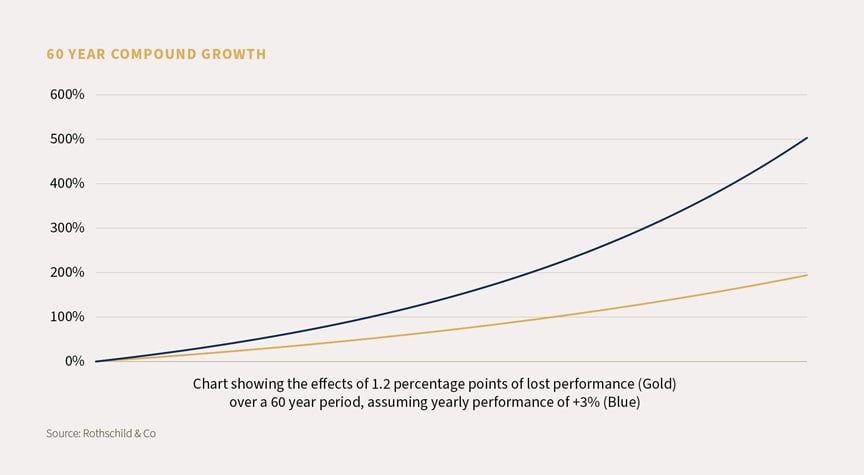
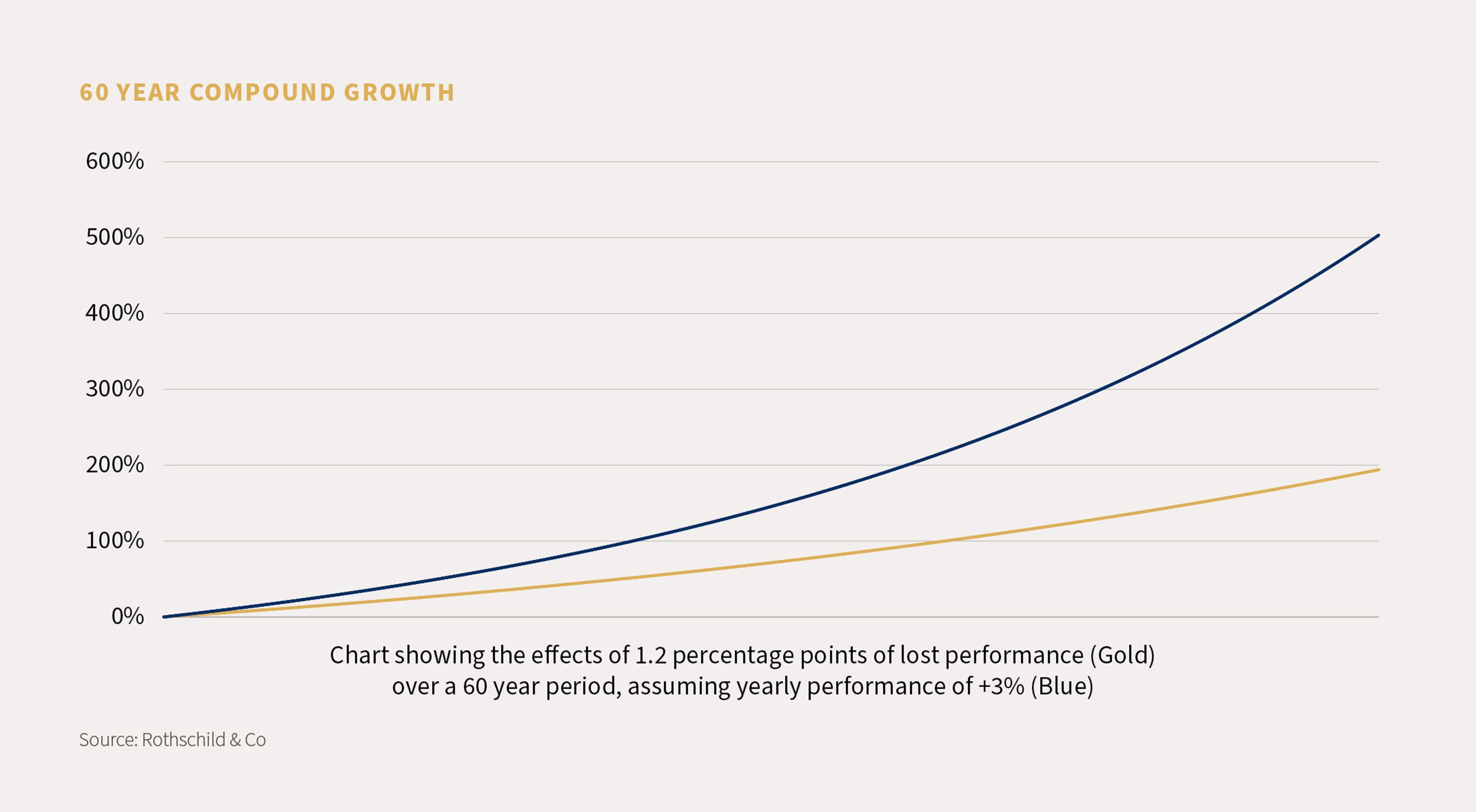
They found that moving money in and out of funds at the wrong times cost investors nearly 1.2 percentage points of performance each year.
Like the taxi drivers, investors were locking in the very losses they were trying to avoid by getting swept up in market noise. And a loss of 1.2 percentage points a year, compounded over a lifetime, can have a considerable effect on your wealth.
The pain of missing out
There is an unfortunate irony at the heart of investing. Discipline and perspective are usually the first casualties during market booms and busts, the very times when they matter most.
As we explained recently in The Rhythm of Markets, fear is one of the most powerful emotions driving a market mania. During a crash, it's the fear of losing the wealth you already have; in a bubble, it's the fear of losing out on the extra wealth you could have had.
The latter is often called FOMO for short, the Fear of Missing Out, but given what we know of the impact of financial loss on our wellbeing, it could more accurately be described as POMO — the Pain of Missing Out.
At times like these, investors can lose sight of the risks they would normally consider, paying higher and higher prices in an effort to cash in while they still can. This leaves them at the mercy of major market corrections.
South Korea provides a striking recent example. After spectacular gains in chipmakers SK Hynix and Samsung Electronics, retail investors piled into the market earlier this year, with many using leveraged ETFs.
These funds typically deliver double the returns on good days, but double the losses on bad ones.
By the end of July this year, two leveraged ETFs tracking SK Hynix had fallen around 63% since launching just two months earlier, while nearly 70% of SK Hynix investors at one major brokerage were in the red.9
Some investors sold their leveraged positions for fear of further losses, only to be caught out again when chip stocks rebounded. They lost money on the way up and on the way down.
Often, these mistakes are made worse by an overly risk-averse approach in the future. In one study, nearly a third of US households that had panic sold in the past never invested in equities again.
Losing perspective
Author and former professional poker player Annie Duke has a good piece of advice in her 2022 book Quit:
The worst time to make a decision is when you're 'in it'."
She illustrates this with a sobering statistic: eight times as many people die on the way down from climbing Everest as on the way up.
When the summit is within reach, climbers often ignore the warning signs that would usually encourage them to turn back. By the time they've realised they've pushed themselves too far, it's already too late.
In the heat of the moment, it's easy to lose focus on your long-term objective.
"The real goal in climbing Everest is not to reach the summit," Duke explains. "It is, understandably, the focus of enormous attention, but the ultimate goal, in the broadest, most realistic sense, is to return safely to the base of the mountain."
Our investment approach has a similar purpose. We don't try to maximise returns in every upswing or anticipate every downturn. This would require perfect foresight, and relying on market predictions can be perilous.
Instead, our goal as a group is to deliver long-term wealth preservation and prudent growth. At Rothschild & Co Wealth Management UK, we do this by investing from the bottom up in high-quality companies that we expect to remain resilient across a range of different market environments.
These growth-oriented return assets are balanced with diversifying assets, which aim to provide protection when markets are volatile. We hope this smooths the investment journey for our clients, and provides greater peace of mind.
Overcoming biases
No one is immune to the behavioural biases or motivations that affect decision-making, including ourselves. We'd therefore like to spend some time now explaining how we seek to avoid these problems in our investment approach.
Some answers can be gleaned from the research and anecdotes we have discussed already in this letter. For example, a follow-up to the New York City taxi study found that certain drivers were more prone to loss aversion than others.
The more experienced the driver, the less likely they were to be swayed by the conditions in front of them.
Across more than 200 years of history, Rothschild & Co has lived through very different economic landscapes, market cycles and periods of profound uncertainty.
Our history does not guarantee perfect judgement; we are aware of how insidious overconfidence bias can be. But it does provide useful context and keeps us focused on the long-term view.
We have also sought to create an environment where investment ideas are openly challenged rather than simply reinforced. Research is shared and debated across our teams, with analysts frequently asked to act as 'devil's advocate' to spot weaknesses and overlooked issues in the investment case.
For each new investment, we establish a roadmap setting out the markers and milestones we expect to see, as well as developments that would challenge our original thesis. Our roadmaps provide a useful reference point when markets are moving quickly and the temptation to react is greatest.
This brings us back to Everest. Climbers often agree a fixed turnaround time before embarking on their expedition, precisely because they know how difficult it is to make clear-headed decisions once the air gets thin and fatigue sets in.
Yet, as we've discovered, they do not always stick to it.
Investment processes are no different. Roadmaps and safeguards can improve the quality of our decisions, but they cannot guarantee that we will always make the right call. We make mistakes too.
That's why we conduct post-mortems to examine both what went right and what went wrong, deliberately leaving a cooling-off period before we do so to reduce the effects of recency bias.
These reviews are usually led by someone other than the original analyst and aim to look beyond whether the outcome itself was good or bad. We want to know if the decisions we made were sensible given the information available at the time.
By comparing these reviews, we can look for recurring behaviours, learn from our mistakes and try to improve our investment approach for the future.
The purpose of wealth
"There is no reason to risk what you have and need for what you don't have and don't need." — Morgan Housel, The Psychology of Money.
We believe prudent investing begins with knowing what your wealth is for.
There is no single definition of success. A day trader trying to profit from today's price movements has a very different objective from a family hoping to preserve wealth for their children and grandchildren.
The decisions that make sense for one, and the price they're willing to pay, both literally and figuratively, may be entirely unpalatable to the other.
For many of our clients, the goal is to have enough wealth to maintain the life they want, support the people and causes they care about, and pass wealth on to future generations.
Once you have a clear objective, the next challenge is sticking to the best course of action to achieve it, in spite of what the market or other investors are doing.
We see a core part of our role as a wealth manager as keeping your purpose firmly in view when uncertainty threatens to obscure it.
Ready to begin your journey with us?
Citations
[1] Your Money and Your Brain, Jason Zweig, 2007, p5
[2] The Psychology of Money: Timeless Lessons on Wealth, Greed and Happiness, Morgan Housel, 2020, p103
[3] For more information on psychological biases, please read our previous Quarterly Letters Making better investment decisions, Balancing risk and return and Fighting against our instincts
[4] Thinking, Fast and Slow, Daniel Kahneman, 2011
[5] Does losing money truly hurt? The shared neural bases of monetary loss and pain, Huixin Tan et al, Human Brain Mapping 43(10), July 2022, p3,153-3,163
[6] Labour Supply of New York City Cab Drivers: One Day at a Time, Colin Camerer et al, Quarterly Journal of Economics, May 1997, p407-441
[7] Quit: The Power of Knowing When to Walk Away, Annie Duke, 2022 [Kindle Edition], p50
[8] Do UK Retail Investors Buy at the Top and Sell at the Bottom? Andrew Clare and Nick Motson, Cass Business School, 2010
[9] Retail Investors Bleed 63% on Leveraged ETFs as Fund Firms Reap 3.7 Billion Won, Seoul Economic Daily, Kim Yeo-jin, 6 August 2026
[10] When Do Investors Freak Out? Machine Learning Predictions of Panic Selling, Daniel Elkind et al, Journal of Financial Data Science 4(1), p11–39
Past performance is not a guide to future performance and nothing in this article constitutes advice. Although the information and data herein are obtained from sources believed to be reliable, no representation or warranty, expressed or implied, is or will be made and, save in the case of fraud, no responsibility or liability is or will be accepted by Rothschild & Co Wealth Management UK Limited as to or in relation to the fairness, accuracy or completeness of this document or the information forming the basis of this document or for any reliance placed on this document by any person whatsoever. In particular, no representation or warranty is given as to the achievement or reasonableness of any future projections, targets, estimates or forecasts contained in this document. Furthermore, all opinions and data used in this document are subject to change without prior notice.