Is winter coming for the UK consumer?
The UK consumer has, so far, proved resilient in the face of the energy price shock caused by ongoing conflict in the Middle East. However, the outlook is beginning to look more challenging.
Oil prices directly affect inflation in two ways: fuel costs, and utility (gas and electricity) bills.
Shocks to the oil price translate almost immediately to UK fuel inflation, albeit in a muted fashion. Indeed, the average price of petrol at the pump was nearly 30% higher last week compared to the final week of February, just before the conflict began. As a result, fuel inflation has, since March, contributed a cumulative 65bp (0.65 percentage points) to headline CPI.
On the other hand, shocks to the price of natural gas only take effect with a lag, as the energy regulator, Ofgem, sets the national energy price cap quarterly. The cap is based on the lagged price of wholesale gas forward contracts. The price of natural gas impacts not only heating costs but electricity bills, too, as gas is used in generating it.
The next energy cap reset has recently been announced and will result in a 4% increase for the October-December period. Meanwhile, the observation window for the Q1 2027 cap has already started and will run until mid-November. A back-of-the-envelope calculation suggests that if the price of the relevant forward contracts continues to average what it has over the past month, the cap could jump by 16% in January, translating to a 50bp (half a percentage point) contribution to headline inflation.
UK natural gas price and Ofgem energy cap
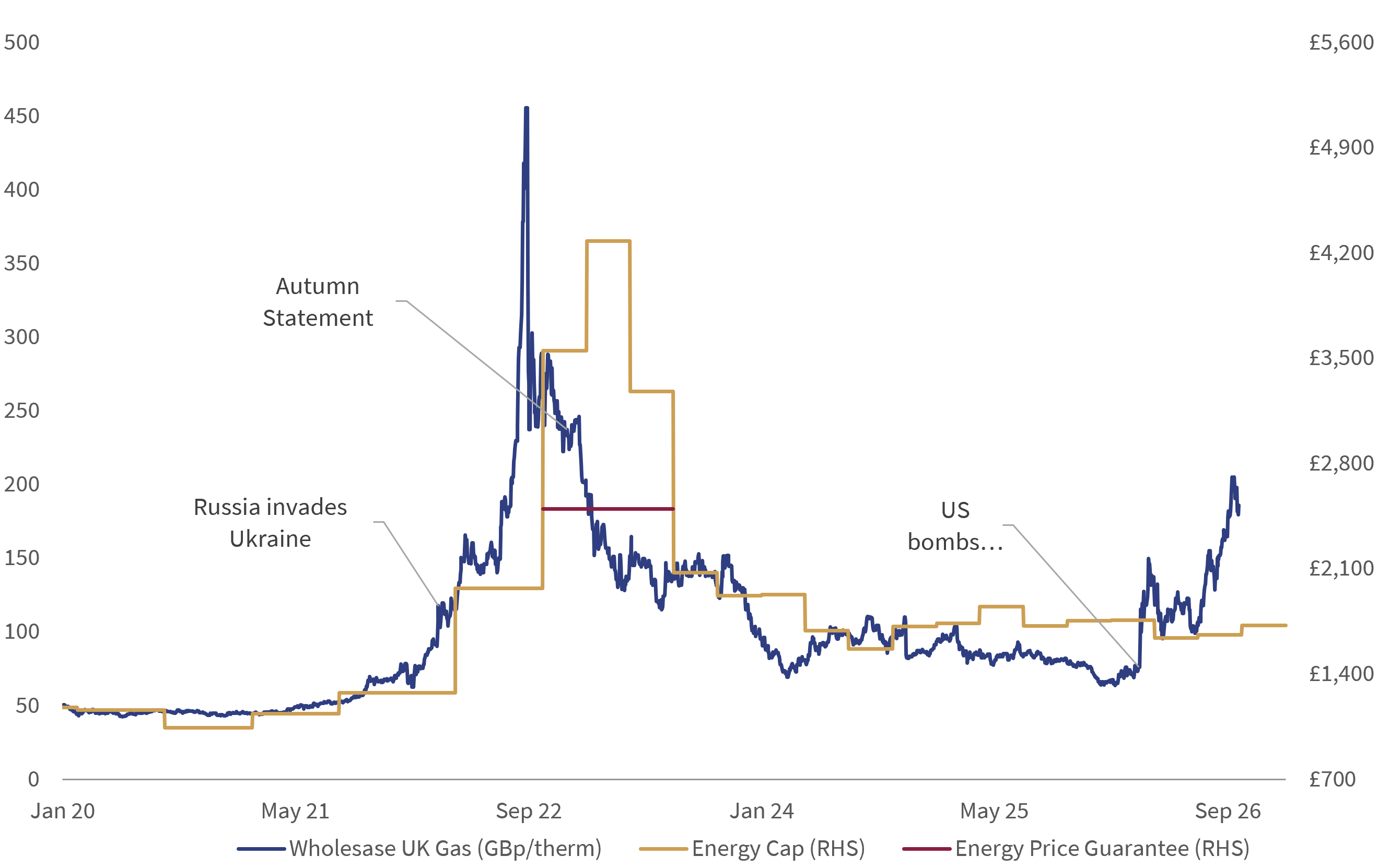
Source: Rothschild & Co, Bloomberg, Ofgem. Note: latest energy cap increase shown is Oct-Dec 2026:
Oil prices also affect inflation indirectly, of course.
Looking at the broader CPI index, second round effects may be limited by slack in the labour market, which is still soft despite showing signs of stabilisation. In fact, services inflation has been declining and, given the ongoing moderation in pay growth, further disinflation in this category should be in the pipeline.
However, there are probably upside risks to food prices, which tend to correlate tightly with energy inflation, albeit with a 6 to 12-month lag. Oil prices affect shipping and transport costs, while gas is a key input in the production of nitrogen-based fertilisers. Meanwhile, there is ongoing uncertainty over the eventual impact of El Niño on global agricultural output.
An increase in both food and energy inflation (which together account for 16% of the CPI basket) could be a double whammy for discretionary consumer spending. This is not the only risk.
UK interest rates are likely to start rising soon (the ECB and Fed have already raised theirs – the ECB twice). Markets are currently pricing in four 25bp Bank Rate hikes over the next 12 months. Given the softer labour market, this may be a bit of an overshoot, but some tightening by the BoE is still likely, and this will affect household spending power (although gradually: most UK mortgage rates these days are fixed). This does not bode well for durable goods consumption – autos, appliances, furniture – nor for construction services, including home renovations.
Lastly, it looks as if taxes may be rising in the pending late-October budget. The UK’s fiscal rules are self-imposed, but the new administration seems likely to stick to them, which may require some fiscal consolidation. The most effective way to shore up public finances quickly, a broad-based hike in the basic rate of income tax, would deliver a material blow to household consumption. Though this is improbable (it was ruled out by Labour’s 2024 election manifesto), any tax increase on consumers would add to the growing squeeze on spending power.
There may be scope for household saving rate to fall and act as a buffer against rising energy prices, as largely happened after the “cost of living” crisis first erupted (more dramatically) in 2022. In fact, this has plausibly already been the case through Q2 (data will only be published at the end of September).
However, such support is ultimately temporary.
To sum up, over the next couple of quarters, households in the UK could face a combination of higher energy costs, rising food prices, tax increases, and newly elevated interest rates. Other things remaining equal, all this points to downside risks to real spending, especially discretionary categories, going into the winter.
Ready to begin your journey with us?
Speak to a Client Adviser in the UK or Switzerland
Past performance is not a guide to future performance and nothing in this article constitutes advice. Although the information and data herein are obtained from sources believed to be reliable, no representation or warranty, expressed or implied, is or will be made and, save in the case of fraud, no responsibility or liability is or will be accepted by Rothschild & Co Wealth Management UK Limited as to or in relation to the fairness, accuracy or completeness of this document or the information forming the basis of this document or for any reliance placed on this document by any person whatsoever. In particular, no representation or warranty is given as to the achievement or reasonableness of any future projections, targets, estimates or forecasts contained in this document. Furthermore, all opinions and data used in this document are subject to change without prior notice.