Wealth Management: Company Insights – Drinks with Diageo

Preserving wealth for the long-term requires us to have a deep understanding of the companies we invest in. As a global beverage company with leading and recognisable brands, Diageo has withstood the test of time, appearing in our portfolios over many years. With this in mind, we interviewed Harriet Radcliffe, Investor Relations Manager, and Harriet Howey, Global Non-Financial Reporting and ESG Lead, at Diageo, to bring you insights into how Diageo has achieved its environmental, social and governance (ESG) credentials, and how it addresses investors' growing calls for sustainability in an increasingly ambitious market.
Q1. What challenges do drinks companies face when addressing their environmental footprint?
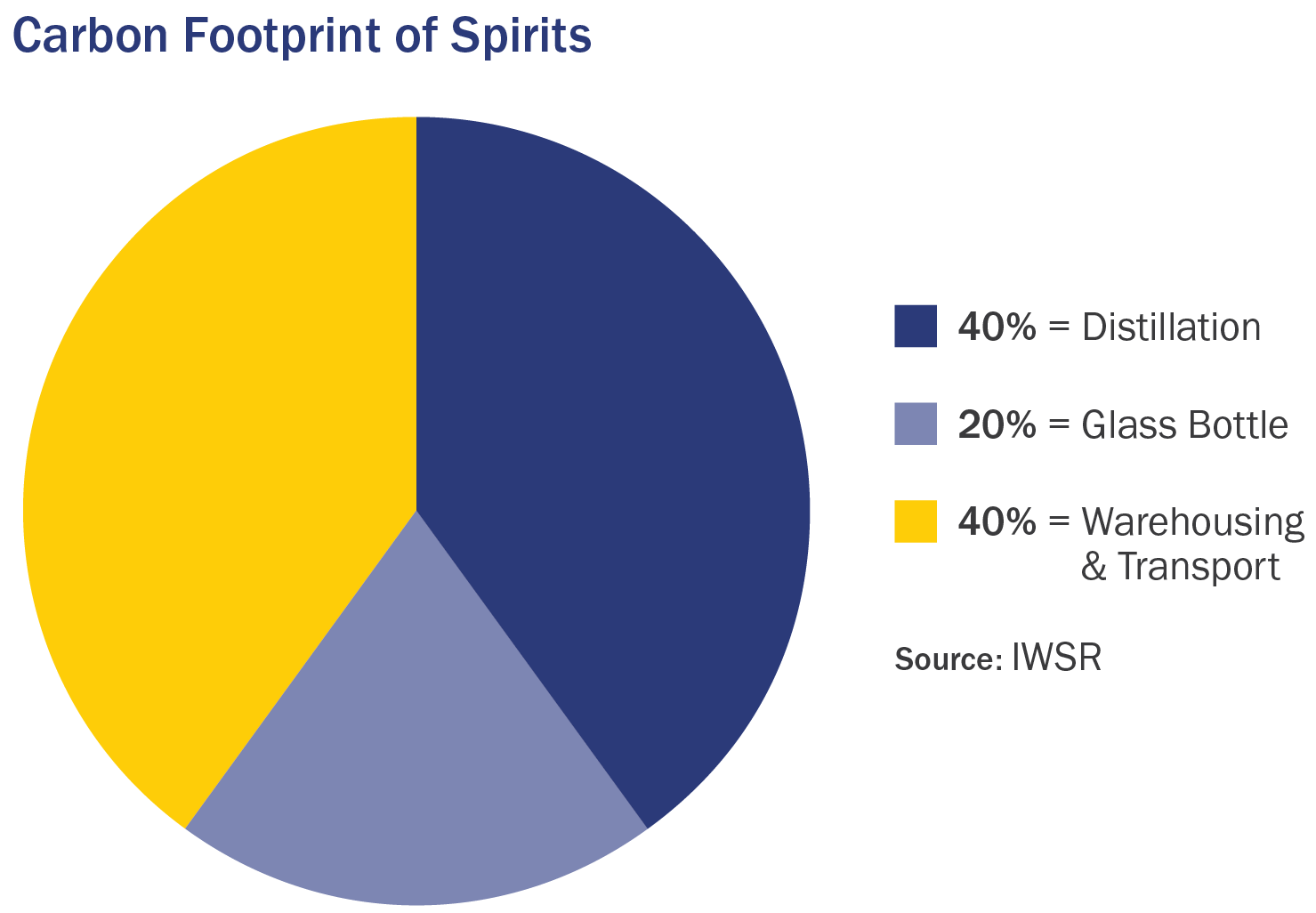
The drinks sector faces three main environmental challenges: 1) carbon emissions, 2) water consumption and 3) packaging.
First of all, the beverage sector has to consider its carbon footprint and how it can reduce its carbon emissions along the supply chain from production, to distribution, to sales.
Secondly, our industry must aim to reduce our water consumption and pollution of water resources. Thirdly, drinks companies must be diligent in how we deploy packing materials. As a drinks vendor, Diageo incorporates sustainability aspects in the design and selection of packing materials while ensuring our packaging is robust and fit for purpose. In this respect, innovations such as the paper bottle help us to improve our environmental footprint. To be successful in all these areas, Diageo works with suppliers who bring expertise in sustainable innovation. We believe that environmental challenges are best addressed together with a broader group of stakeholders, so as to draw on innovation beyond our business.
Q2. How specifically has Diageo addressed these three key challenges around carbon emissions, water usage and packaging materials?
Diageo approaches these key issues by setting itself ambitious targets to solve them. Besides reducing the materials and resources used in our production facilities, we work with our suppliers and distributors to reduce pollution and waste at all levels of our business.
Externally, Diageo supports and participates in organisations that advocate change in these three key areas. Through these platforms, Diageo is keen to share its knowledge and experiences, as well as learn from others so as to improve industry practice.
With respect to water, Diageo is a founding member of the Water Resilience Coalition which promotes the responsible stewardship of water. Moreover, Diageo is building on nearly 20 years of work and collaboration, including partnerships such as the UN Global Compact CEO Water Mandate, Water Resilience Coalition, Beverage Industry Environmental Roundtable, and Alliance for Water Stewardship, a long-standing global strategic membership with WaterAid and memberships of the SDG Business Avengers.
For carbon reduction and packaging, Diageo has strong partnerships too. In July 2020, we launched Pulpex Ltd, a new partnership between Diageo and Pilot Lite, to create a new spirits bottle made out of paper. Considering our usage of glass, we used cutting edge technology to produce the whisky industry’s lowest carbon bottle by collaborating with R&D body Glass Futures and glass manufacturer Encirc. Our Black & White Scotch whisky will be the first brand to trial this bottle.
Q3. According to rating agencies like MSCI, Diageo scores well on ESG issues. What factors contribute to Diageo's high ESG score?
It may be surprising to your readers that an alcoholic beverage company has a high ESG score but for us at Diageo, ESG targets are closely linked to our core business strategy. We set ourselves sustainability targets and assess whether these have a material impact on E, S and G factors. Our approach has received positive feedback from rating providers such as MSCI, noting that we have long-term ESG targets of up to 10 years and that we focus on tackling issues which are both material and measurable in nature.
Additionally, MSCI has commented favourably on Diageo's comprehensive and transparent reporting of ESG issues – for more see our 2020 Report. We report quantitative and sector-comparable data on our ESG performance, using three frameworks in order to promote transparency:
- The standards of the Global Reporting Initiative Index
- The rules of the Sustainability Accounting Standards Board
- The principles of the United Nations Global Compact
MSCI's ESG scores are a valuable source of feedback for Diageo, but we should not rely on ratings in isolation. In our opinion, it is more important for companies to have robust and transparent reporting processes because, in the end, rating agencies like MSCI can only analyse and evaluate information which companies report.
Q4. Looking at Diageo's ESG agenda, what are your current priorities?
As mentioned, our 10-year action plan: "Society 2030: Sprit of Progress" helps us create a more inclusive and sustainable environment in which to do business.
Our plan has three pillars:
- To promote positive drinking through advocating moderation and addresses the harmful use of alcohol, including heavy episodic drinking and underage drinking.
- To become a champion for inclusion and diversity by seeing more gender and ethnic diversity in leadership roles.
- To pioneer grain to glass sustainability including the preservation of water.
Diageo’s goal is to improve our water use efficiency by 30% globally and by 40% in water stressed areas, having already achieved a 46% improvement in water use efficiency through to 2020 from a 2007 base. The acceleration to a low carbon world requires us to become net zero carbon in our direct operations and sustainable by design, by ensuring that 100% of our packaging is widely recyclable.
Q5. Finally, when thinking about Diageo's ESG achievements, what are you most proud of and in which area is there room for improvement?
We are very proud of our long-standing commitment to improving Diageo's sustainability credentials. In 2015, Diageo set itself ambitious targets in a range of ESG areas to be achieved by 2020. The results – presented at the end of 2020 – showed that Diageo had cut its carbon emission in direct operations by 50% and reduced total greenhouse gas emissions along the total supply chain by 33%. Moreover, we were able to outperform our diversity and inclusion goals with around 40% of leadership roles held by woman.
We at Diageo are proud of these achievements, but there is always room for improvement. Looking ahead, Diageo has set ambitious and strict targets for 2030. These include becoming carbon neutral in our direct operations by 2030 coupled with the goal to use 100% renewable electricity for our direct operations. Moreover, we have set an ambitious target to achieve zero waste in our direct operations and zero waste-to-landfill in our supply chain by 2030.
To conclude, there is no time to waste in this field – Diageo can continue to innovate on environmental, social and governance matters in the coming decade but only if we keep working at it.
Related Files
More Information