Water: The Future Starts at the Source

Water is such an integral part of our daily lives that it has almost become invisible. It flows from our taps, nourishes crops, powers industries and supports virtually every aspect of our lives. Yet behind this apparent abundance lies a more fragile reality: only a tiny fraction of the water on Earth is readily accessible and usable.
The year 2026 once again highlighted this vulnerability. Droughts, usage restrictions, pressure on certain local water resources and growing concerns about water quality all point to a growing global awareness: water is no longer merely an environmental issue; it is becoming an economic, social and strategic one.
Global water demand could exceed available resources by nearly 40% by 2030, while almost two billion people still lack access to safe drinking water.
As water becomes scarcer in certain regions of the world, trade-offs between agricultural, industrial, energy and domestic uses are becoming more visible, raising new economic and, at times, geopolitical challenges.
Like climate change, water has gradually moved beyond specialist circles to become a central concern for businesses, public authorities and investors alike.
A Resource at the Heart of Our Economies
Water is often instinctively associated with nature or agriculture. Yet it is present in nearly every good and service we consume.
Producing steel, manufacturing pharmaceuticals, processing food products and cooling industrial infrastructure can all require considerable volumes of water.
Its ubiquity may make it easy to overlook, but water remains one of the most essential resources underpinning the functioning of our economies.
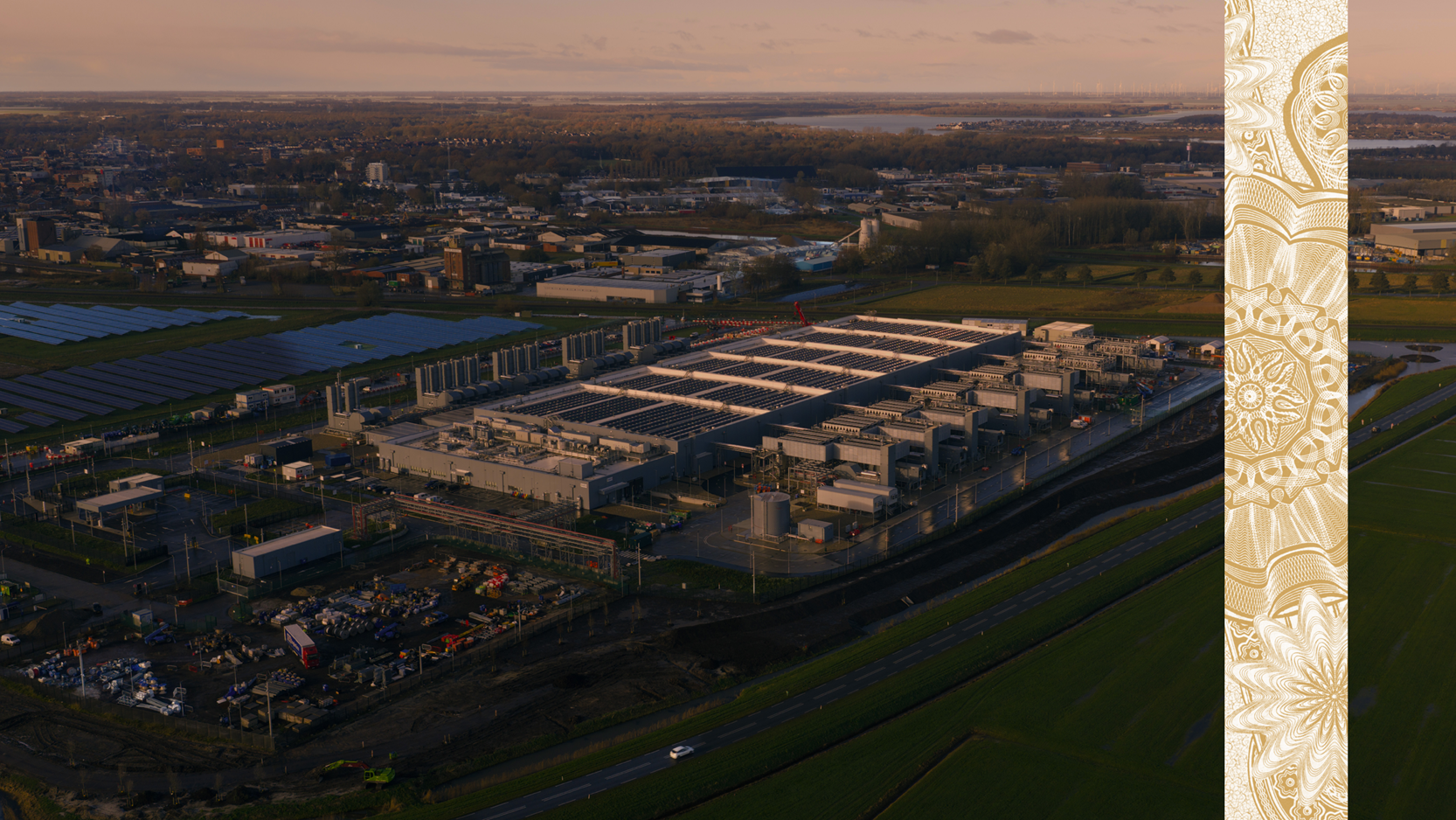
Even major technological revolutions depend on it. As artificial intelligence transforms our habits and economies, it is worth remembering that these advances also rely on a resource as fundamental as water. Digital infrastructure requires significant cooling capacity, reminding us that even the most sophisticated technologies remain rooted in the physical realities of our planet.
This reality reminds us that the challenges of the 21st century are rarely isolated. Climate, biodiversity, energy, technological sovereignty and water are deeply interconnected. Climate change is altering water availability, while the degradation of rivers, wetlands and aquifers is weakening biodiversity and the ecosystem services they provide. In some regions, control over water resources is also becoming an issue of sovereignty and geopolitical balance, influencing food security, energy production, industrial development and, at times, stability between territories. Water therefore sits at one of the most tangible intersections between climate, nature and the resilience of our economies.
From Constraint to Competitive Advantage
Water-related pressures now affect a wide range of industries.
In the food industry, water directly affects supply chain security and production capacity. In the chemical industry, it raises questions about effluent quality and ecosystem preservation. In the steel industry, it lies at the heart of industrial processes and even decarbonisation strategies. Three sectors, three different realities, yet the same conclusion: water is no longer simply a factor of production. It is gradually becoming a driver of resilience and value creation.
At first glance, these sectors have little in common. Yet they share the same challenge: how can they continue to produce, innovate and grow in a world where certain resources are becoming scarcer and increasingly contested?
The companies best equipped to address this challenge are not necessarily those that consume the least water today. More often, they are those investing in better water management, recycling, reducing withdrawals and redesigning industrial processes.
More broadly, the way a company manages its dependence on water is often an indicator of its ability to anticipate long-term transformations and adapt to a more constrained environment.
Investing in Solutions
This evolution invites a different perspective. Water is not merely a source of risk; it is also a driver of innovation.
Companies are developing technologies to detect leaks, improve networks, treat wastewater, reduce industrial water consumption and secure access to high-quality water. Others support municipalities and industrial operators in using this increasingly strategic resource more efficiently.
This trend is not limited to companies directly involved in water treatment or distribution. It also extends to many organisations helping to reduce consumption, improve the efficiency of industrial processes and strengthen infrastructure resilience in the face of water stress.
For investors, water has a distinctive characteristic: unlike many economic trends, its importance depends neither on a cycle nor on a passing fashion. A growing global population, industrialisation, the expansion of digital infrastructure and the effects of climate change continue to increase pressure on a resource whose availability remains limited.
Like energy, critical metals and certain essential infrastructure assets, water illustrates how a scarce and difficult-to-substitute resource can gradually become a defining factor in economic decision-making and long-term investment opportunities.
Thinking Long Term
Water has a unique characteristic: we simply cannot do without it.
As pressure on this resource intensifies, its preservation is becoming an issue that extends far beyond environmental considerations. It affects economic stability, innovation, public health and, more broadly, the way we prepare for the future.
This growing scarcity also invites broader reflection among long-term investors. Unlike many sectors whose outlook can be heavily influenced by economic cycles or short-term political developments, water-related needs are driven by structural trends: continued global population growth, rising industrial demand and a resource whose availability is becoming increasingly constrained.
Because it is essential, limited and irreplaceable, water reminds us that part of tomorrow’s value depends on our ability to act today. Certain resources derive their true value from the long term and from our ability to preserve the balances upon which future generations will depend.