Click here to download the full report
Foreword
“To use a computer analogy, we are running twenty-first-century software on hardware last upgraded 50,000 years ago or more. This may explain quite a lot of what we see in the news.” ― Ronald Wright, A Short History of Progress
Over millennia, humans have evolved to identify and respond to immediate threats. For most of our history, this served us well. Short-term threats were aplenty and neither the ability nor responsibility to plan decades ahead were yet upon us.
We now have a much greater understanding of the challenges facing humanity and the timeframes over which they could occur. Yet, as the above quote alludes to, is our very nature limiting the action being taken in response?
For instance, our understanding of the causes and effects of climate change has moved forward significantly in recent decades, but action to address it collectively falls short of the goals of the Paris Agreement. Is this because timeframes such as 2030, 2050, or 2100 feel so distant?
Possibly, especially as the modern world is not devoid of shorter-term challenges and threats, as demonstrated in 2022 by the tragic events of the war in Ukraine. In addition to the immediate humanitarian costs, the war also demonstrates the links between societies and our environment.
In response to Russia’s aggression, Western nations have sought to reduce imports of oil and gas from Russia. This has led to a reshaping of energy markets, prompting debates around energy security now and over the long term, with environmental and social implications whatever the chosen path.
The providers and allocators of capital, us included, have a key role to play in the fair transition to a more sustainable global economy. But, while necessary, this alone will not be sufficient. Capital allocation needs to be combined with government policies containing credible mixes of carrots and sticks.
In that respect, 2022 may prove to be a seminal year with the signing into law of the Inflation Reduction Act in the United States. The Act directs meaningful government spending towards emissions reduction technologies, as well as environmental justice issues. This bold move is likely to increase the level of policy ambition on this side of the Atlantic.
However, not all policy moves have been positive. In parts of the US, ‘ESG investing’ has come under attack as a breach of fiduciary duty and a form of ‘woke capitalism’. In our view this represents a fundamental misunderstanding of what our responsibilities as investors are. We believe that in the long-term sustainability factors are ultimately financial factors and need to be taken seriously. We take pride in the role we play as stewards of capital in 2023 and beyond.
Read more articles
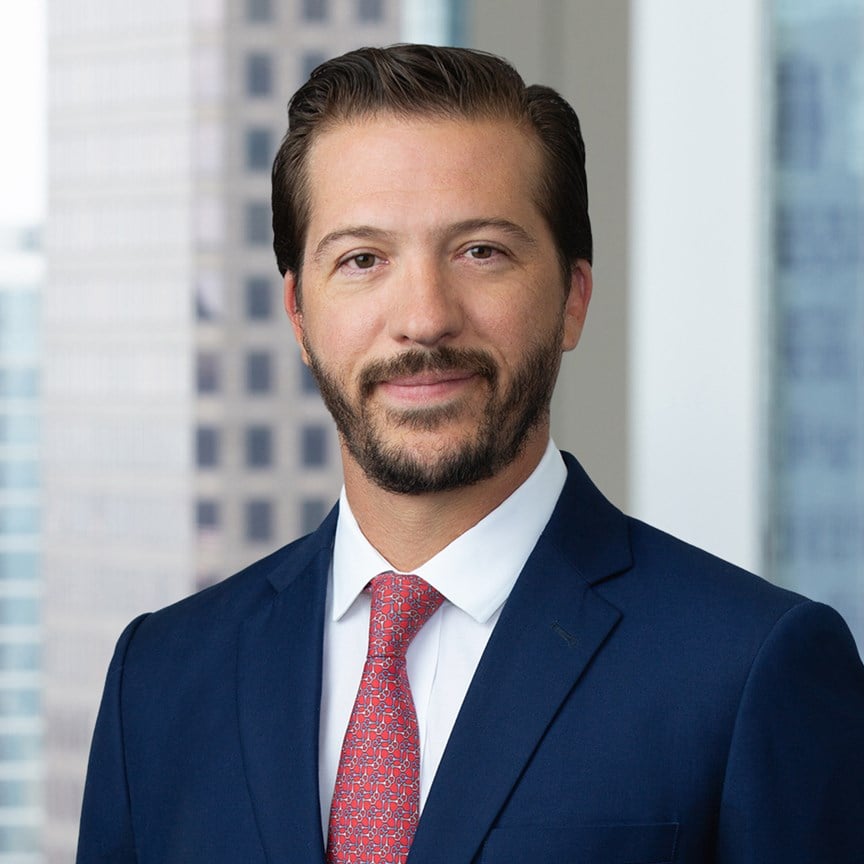 Rothschild & Co appoints Pablo Hernandez Schmidt-Tophoff as Head of Energy Services & Decarbonization, North America
Rothschild & Co today announced that Pablo Hernandez Schmidt-Tophoff has joined its Global Advisory business as Managing Director, Head of Houston and Head of Energy Services & Decarbonization, North America.
 Asset Management: Monthly Macro Insights - October 2026
Investments linked to artificial intelligence continue to support global growth, but they are also contributing to a sustained rise in long-term interest rates. At the same time, geopolitical tensions and uncertainty surrounding the Federal Reserve’s communication are maintaining a more fragile economic environment.
 Debt and taxes
Fiscal debates focus on debt and deficits, but government size may matter more. While debt shows little link to bond yields, higher taxes and spending can affect competitiveness, growth and economic efficiency.
 France: Fiscal pressure
France’s political uncertainty and fiscal pressures have unsettled markets, widening bond spreads and weakening the euro. While risks remain elevated ahead of 2027 elections, France’s challenges stop short of a sovereign debt crisis.
 Emotionally invested
This Quarterly Letter explores how emotions and behavioural biases can undermine investment decisions. It highlights the importance of discipline, perspective and a clear long-term purpose in preserving and growing wealth through market uncertainty.
 Entrepreneur Networking Dinner
Rothschild & Co Wealth Management UK recently hosted an intimate networking dinner to encourage the conversations and connections that rarely happen in the day-to-day demands of building a business.