Wealth Management: Instant Insights - Industry 4.0 - From steam power to smart machines
Investment Insights and Investment & Portfolio Advisory, Wealth Management
March of the machines
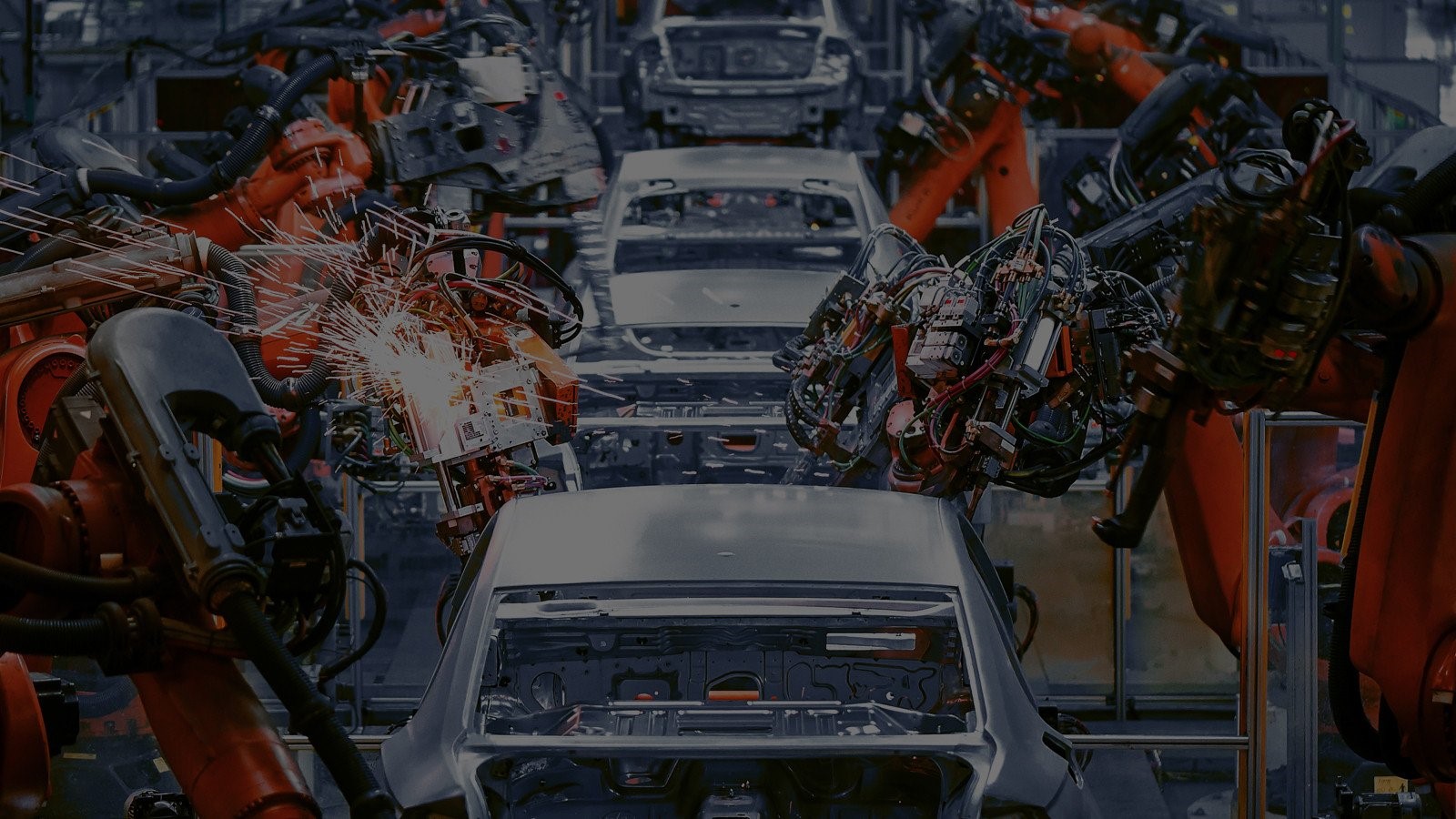
A record of 2.7 million industrial robots operated in factories globally in 2020, illustrating some of the challenges posed by the pandemic for physical manufacturing facilities.
Working smart, not hard
Artificial intelligence and connectivity are projected to increase productivity by up to 30% in some sectors. This is expected to save some US$400 billion in global costs each year for companies that successfully implement Industry 4.0.
Growth in Industry 4.0 spend
The market for Industry 4.0 is expected to top US$300 billion by 2023, growing at a compound annual growth rate (CAGR) of 37% (2017-2023).1
1 IoT Analytics, Market Report: Industry 4.0 & Smart Manufacturing 2018 - 2023; 2018
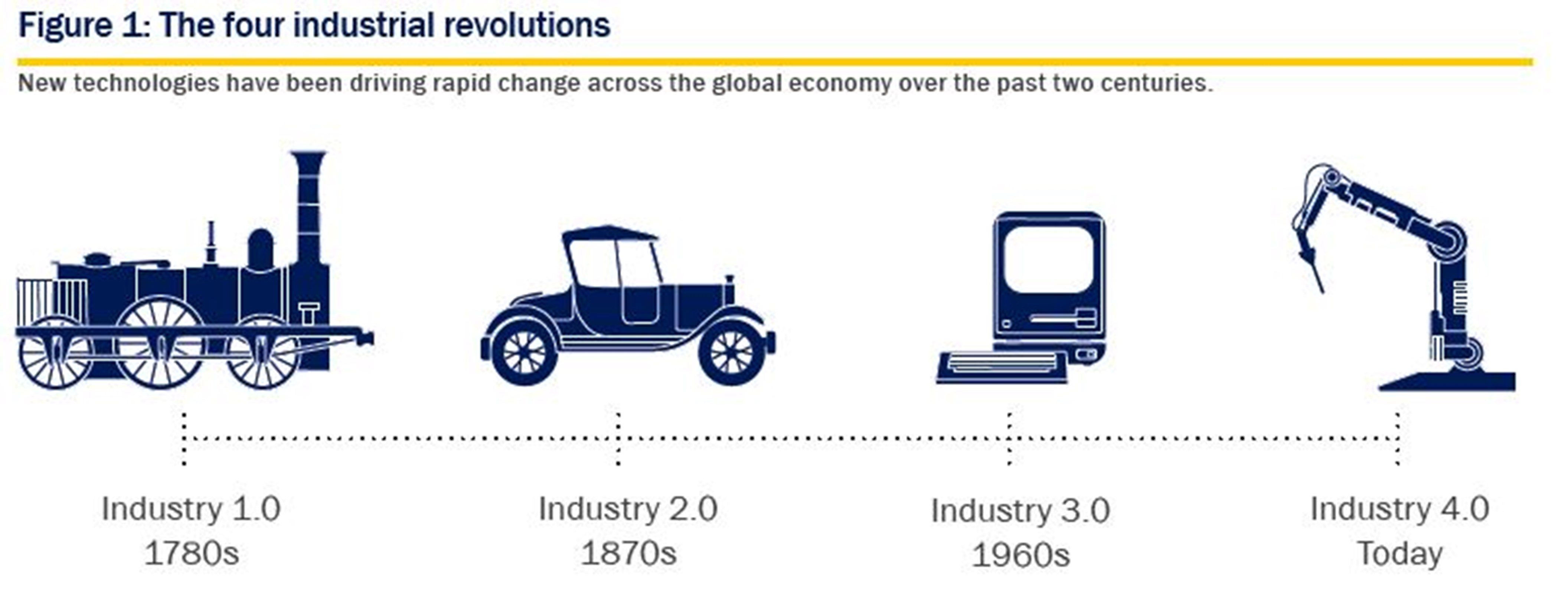
The fourth industrial revolution – Industry 4.0 – is set to change the global economy in profound ways, as the three before have done. Starting in the 18th century, the first industrial revolution involved the transition from agrarian to manufacturing processes.
The second industrial revolution was a phase of rapid standardisation involving mass production. A notable example is Henry Ford’s factory at Highland Park Michigan, which in 1913 became the first in history to assemble cars on a moving assembly line.
The third industrial revolution saw the rise of electronics, computers and automation.
Industry 4.0 refers to a new generation of automated machinery, enhanced by wireless connectivity and digital technology. These machines are connected to systems (the Internet of Things) that can visualise the production line and take intelligent, independent decisions.
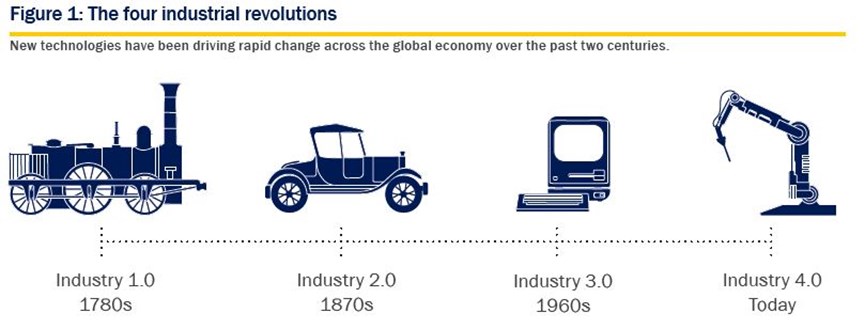
Source: Rothschild & Co
Source: Rothschild & Co
At the heart of Industry 4.0
Industry 4.0 offers new technologies that affect a wide range of functions. First, machines are enabled to take decisions independently through design processes, simulation, big data and the cloud. Second, smart collaborative robots and sensors increase manufacturing efficiency and accuracy. A third area – in-factory logistics – is improved by the use of automated guided vehicles, which allow for more flexible production and reduced labour costs.
Industry 4.0 meets artificial intelligence
One way to think about Industry 4.0 is in terms of fundamental human functions. Looking at the production line, automation and robotics are the muscles. Augmented, virtual reality and cameras are the senses, while data and connectivity are its central nervous system. The brain, however, is artificial intelligence (AI), which can enhance processes through a collaboration between human and machine.
One of the most common applications of AI within manufacturing is machine learning – the science of computers learning, adapting and acting without any human involvement. Most predictive maintenance systems rely on these techniques. Two of the advantages are lower costs and reduced downtime.
Industry 4.0 spend
Another important pillar of Industry 4.0 is automation, which firms across many industries are set to benefit from. Smart factories with a large degree of automation are expected to dominate within sectors, such as automobiles, electronics and machinery.
In achieving the transition to Industry 4.0, the benefits for these companies are projected to be:
- higher value-added products
- more flexible productions
- improved margins.
Depending on the sector, the impact on profit margins can be substantial. Potential improvement in EBITDA is estimated at up to +35% depending on the degree to which smart manufacturing is implemented.
In the light of the demand for automation and smart factories, the total spend on product and services driving Industry 4.0 is forecast to grow at a CAGR of 37% (2017-2023).


Source: IoT Analytics, Market Report: Industry 4.0 & Smart Manufacturing 2018 - 2023; 2018, Rothschild & Co
Source: IoT Analytics, Market Report: Industry 4.0 & Smart Manufacturing 2018 - 2023; 2018, Rothschild & Co
A future dominated by robots?
A recent International Federation of Robotics report showed a record 2.7 million industrial robots deployed in factories across the globe, expected to reach almost 4 million by 2022. Many companies are reviewing their dependency on more conventional labour, given disruptions to global supply chains seen during the pandemic as factories were forced to temporarily close their doors to contain the spread.
At the same time – and reflecting a growing adoption of robots in factories – new opportunities will arise for skilled workers. That said, differences in education level, industrial development and the composition of economies have contributed to a divergence in estimated automation levels across countries and industries.
We believe that the factories of the future will be more intelligent, effective and cost-efficient. Companies are investing in Industry 4.0 in order to achieve these gains.