


 108 / 204

106
Rothschild & Co | Annual Report 2017
Corporate Social Responsibility
4.3.1 Waste prevention and management
4.3.1.1 WASTE PREVENTION, RECYCLING, REUSE, OTHER FORMS
OF RECOVERY, AND DISPOSAL OF WASTE
In 2017 and as part of environmental improvement actions from the EMAP,
the Group broadened its circular economy activities by implementing
several initiatives, including rolling out more centralised recycling stations,
switching more offices to 100% recycled paper, eliminating single-use cups
and adopting electronic payslips in more office locations.
In line with the EMAP, Rothschild & Co will continue to implement actions
to further improve Group waste management. This includes the separation
of biodegradable waste, predominately food, and ongoing training for
employees to help ensure separation is effectively and efficiently managed.
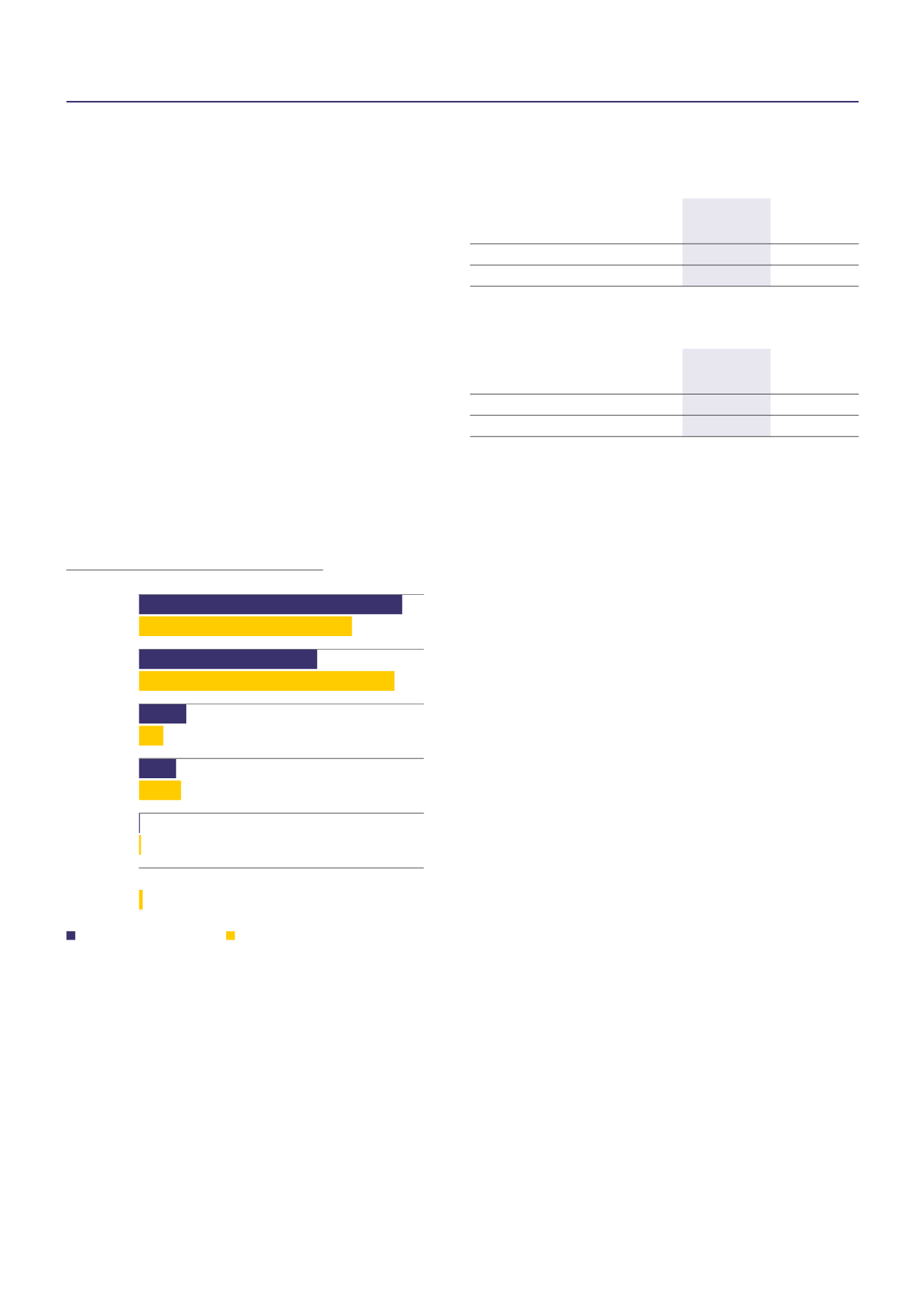
Overall a decrease in total waste of 3% has been recorded. This decrease
is mainly due to waste reduction programmes, more effective waste
separation, staff training and business activity resulting in reduced
materials use. Moreover, the reporting of waste disposal data has been
improved during the financial year ended on 31 March 2017 and is now
more accurate.
Waste disposal data
(1)
Group breakdown by disposal methods (in tonnes)
12 months to 31 March 2017
12 months to 31 Dec 2017
Incineration
(1)
Recycling
Anaerobic
Digestion
(2)
Landfill
Re-use
Composting
(2)
259.2
180.8
216.1
267.0
24.6
48.0
42.7
37.6
2.0
0.9
3.7
–
(1) 95% of incineration is with energy recovery.
(2) Anaerobic digestion and composting are the two food waste disposal methods used
by the Group.
Waste disposal in tonnes
01/01/17
31/12/17
(12 months)
01/04/16
31/03/17
(12 months)
Total Waste Disposal
534.3
548.2
Tonnes/FTE
0.19
0.19
4.3.1.2 ACTIONS AGAINST FOOD WASTE
Food waste in tonnes
01/01/17
31/12/17
(12 months)
01/04/16
31/03/17
(12 months)
Food Waste
40.8
29.1
Tonnes/FTE
0.01
0.01
The Group has continued to expand its programme for separating
biodegradable (predominately food) waste, to more offices globally. In
offices where biodegradable waste is collected separately, there has been
a noticeable reduction in general waste. The collection of biodegradable
waste includes, amongst other things, coffee and tea waste, unwanted or
uneaten food and compostable packaging.
Rothschild & Co recognises the challenges for managing waste, particularly
where a lack of local infrastructure limits effective waste management.
However, Rothschild & Co will continue to work towards finding solutions to
overcome these challenges by working with local Environmental Advocates
and third-party contractors.
4.3.2 Sustainable use of resources
4.3.2.1 WATER CONSUMPTION AND WATER SUPPLY BASED ON
LOCAL CONSTRAINTS
Water is the source of life and many communities are affected by water
stresses and scarcity. Accessibility to clean fresh water is not available
in many parts of the world, although this need not be the case and
with increased awareness and appropriate water management and
infrastructure, some water stresses could be alleviated.
Rothschild & Co operates in many countries, some of which experience
water stress. Whilst the Group is not a major consumer of water, it does
recognise its responsibility to the countries it operates in and the people
who live there.
As Rothschild & Co increases its geographical reporting scope, it will have a
better understanding of these water stresses and in due course, and in line
with its commitment to the Sustainable Development Goal 6 defined by the
United Nations (clean water and sanitation), the Group will work towards
addressing water stress and its impact.
Improved and more accurate data collection for the financial year ended
on 31 December 2017 from many offices has reduced the reliance on
estimated data which routinely underrated water use. Where available,
more accurate data has been used to re state the figure for the financial
year ended on 31 March 2017.
(1) For more information on waste disposal data, please refer below to the additional data notes.