Our story
The foundation of our business is a reputation for trust, integrity and expert advice.
Over the past 200 years we have nurtured this reputation through close collaboration, and by embracing and supporting innovation in order to remain at the forefront of our industry.
-
1769
-
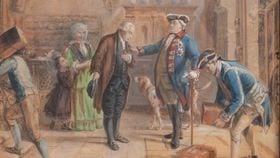
The Rothschild family trace their origins back to 15th century Frankfurt. The records of our business begin with Mayer Amschel Rothschild in 1769.
Mayer Amschel built a successful business in financial services, and a reputation for trustworthiness, deep market understanding, and enduring relationships.
-
-
1810s
-
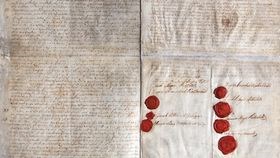
Understanding the importance of maintaining the reputation of the business across future generations, and strength in unity and collaboration, Mayer Amschel created the first partnership agreement, which is the foundation document of our modern business.
-

We are like the mechanism of a watch... each part is essential.
The tenets of the agreement became a business model adopted by his five sons as they established the business in the financial centres of Europe – London, Paris, Vienna, Naples and Frankfurt.
-
-
1820s
-
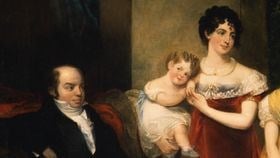
The brothers’ new business were a success due to the involvement of the entire extended family. With the four younger brothers arriving in new countries, they, their wives and their families set to building business and social relationships, information networks. They also promoted cultural exchanges and philanthropic programmes, as exemplified by James' wife Betty. This helped establish the family business’ reputation in new markets.
Rothschild women also took a direct role in the business. For example, Nathan Mayer’s wife Hannah dealt with correspondence and was authorised to sign cheques for the company – unusual at the time.
-
The five brothers combined their local knowledge, networks, and entrepreneurial spirit, to become leaders and innovators with international reach.
An early success was their transformation of the sovereign bond market, creating better outcomes for both lender and borrower. The group would go on to issue bonds and loans for countries on every continent.

-
-
1847
-
The Rothschild family’s business endeavours were also seen as highly principled, reflecting the family’s dedication to philanthropy. The family held themselves accountable for “doing the right thing.” Many potentially profitable ventures were turned down on questions of principle.
The businesses used their expertise and influence to drive change. One example is the British Relief Association of 1847, established by Lionel de Rothschild to encourage and manage donations for famine relief in Ireland and Scotland.
-
-
19th century
-
Rothschild support for new innovations and new global markets help shape the future of our world.
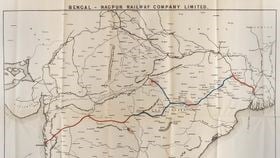
A key example is railways, with Rothschilds helping to establish early networks in France, India, Brazil and other countries, opening up new markets and increasing social mobility. For example the Chemin de fer du Nord in France was transformational in opening up Paris to a broader population.
Other transformative projects included shipping canals, the London Underground, and in mining where a Rothschild assessment of opportunities was seen as authoritative.
-
-
1940s
-

Rothschild family businesses endured the Second World War through the tenacity, optimism and skills of its people. Anthony de Rothschild created a solid foundation for growth following the war in the UK. The French business was controlled by the government during the war years and returned to the family in 1945. Many of the French family were in exile in New York and while there they created the basis of our modern business in the US.
-
-
1950s-90s
-
The group rejuvenated in the aftermath of wars. The French business developed rapidly post-war, particularly in Asset Management and Wealth Management.
Understanding the importance of local knowledge in a transforming world, new offices were established in every corner of the globe, from to Milan to Mexico, Jakarta to Johannesburg, Sydney to Sao Paulo.

-
-
1980s
-

Sharing skills and expertise across the world, the group became leaders in new and growing areas of financial services. A particular example was the adaptation of the privatisation process devised by the UK business across many countries in the 1980s
-
-
1982
-
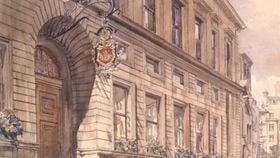
A major challenge to our French business was its nationalisation by the Mitterrand government, losing the rue Lafitte offices, its headquarters since 1812. the family were able to retain ownership of the name.
Led by David and Éric de Rothschild, family members and associates worked together across borders to rebuild the French business from the ground up, regaining use of the family name in 1985 and eventually returning to its market-leading position.

-
-
2003
-
Our French and UK business merged to create a unified group under the leadership of David de Rothschild as Executive Chairman.
-
-
2003-2023
-
With a clarity of vision, a single global brand strategy, and strong culture of collaboration, the group continued to pool its expertise and innovate for the benefit of our clients.
Significant events include the merger of our French Wealth Management business with that of Banque Martin Maurel in 2016, the creation of Global Advisory’s independent Financing Advisory offering, and the birth of the Five Arrows business.
Our stability and long-term perspective helped us weather the challenges of the Global Financial Crisis and, more recently, the challenges of the Covid-19 pandemic.

-
-
2023
-

Rothschild & Co delisted from the Euronext Paris stock exchange, demonstrating the family’s confidence in the business. We strengthened our Partnership structure across all the group, reflecting our diverse business model and focus on collaboration and mutual respect.
-